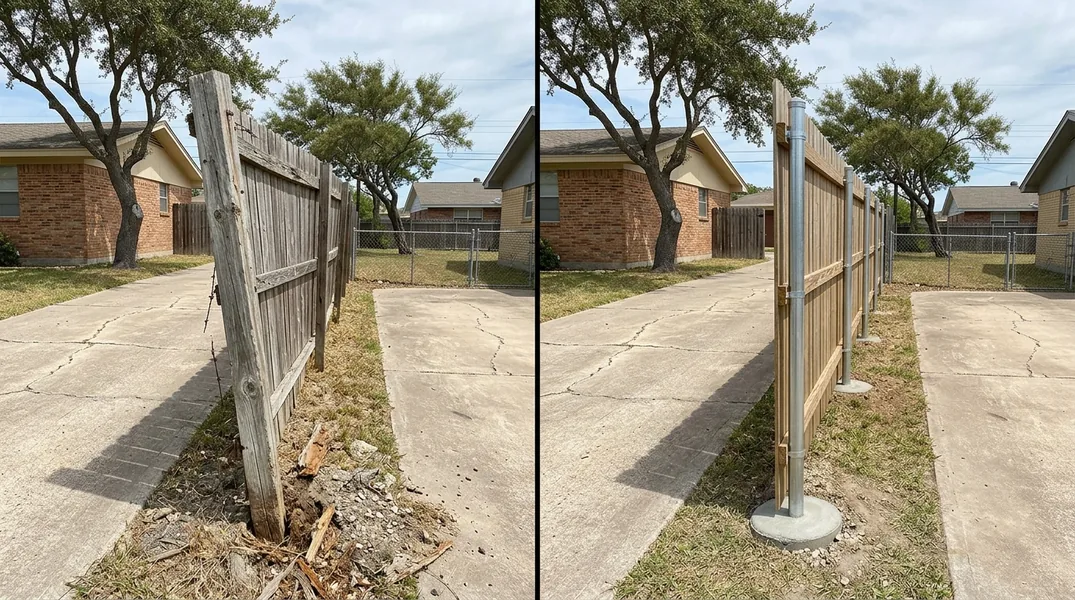
Understanding Caliche and Coastal Clay in Corpus Christi
If you're planning a fence installation in Corpus Christi, you've likely heard locals mention caliche and coastal clay as if they're household words. These aren't just geological curiosities; they're fundamental to how your fence posts will be set and how long your fence will last. Caliche is a naturally occurring layer of calcium carbonate that sits beneath the topsoil throughout much of South Texas. Coastal clay, which dominates many properties near the Gulf, expands and contracts dramatically with moisture changes, creating unique challenges that standard fence installation methods simply cannot ignore.
The reason these soil conditions matter so much is that they directly affect post stability, drainage, and long-term fence integrity. When you drive a fence post into caliche without proper technique, you risk cracking the post, bending the auger, or creating an unstable foundation that will shift as the seasons change. Coastal clay presents a different problem: it holds moisture like a sponge, which means posts can heave upward in winter and settle unevenly in summer. Understanding these conditions before you start digging is the difference between a fence that lasts 15 years and one that requires costly repairs within five.
Do I Need a Permit for a Fence in Corpus Christi?
The short answer is yes, and it's one of the most important questions to ask before purchasing materials or hiring a contractor. Corpus Christi requires fence permits for most residential installations, and the process is designed to ensure your fence complies with local codes and doesn't create safety or property line disputes. Skipping the permit process might seem like a way to save time and money, but it can result in fines, forced removal of your fence, or complications when you sell your home. Lenders and title companies often require proof that fences were installed legally.
The permit application typically requires a site plan showing the fence location, property lines, and sometimes soil conditions. This is where understanding caliche and coastal clay becomes relevant to the permitting process itself. Some inspectors may ask about your post-setting method or require you to specify how you'll handle the challenging soil conditions on your property. When you work with an experienced Wood & Privacy Fence Installation company like Corpus Christi Fencing, we handle the permit paperwork for you and ensure everything meets city requirements.
Fence Height Regulations and Local Codes
Corpus Christi has specific fence height regulations that vary depending on where your property is located and what type of fence you're installing. Residential front-yard fences are typically limited to four feet in height, while side and rear-yard fences can go up to six feet. However, these aren't universal rules; some neighborhoods have stricter requirements, and corner lots may have additional restrictions to maintain sight lines for traffic safety. Before you decide on a fence height, check with the city or your neighborhood's homeowners association to confirm what's allowed on your specific property.
Height regulations exist for good reasons beyond aesthetics. They ensure neighbors can see approaching traffic, prevent fences from becoming barriers to emergency access, and maintain the character of residential neighborhoods. When caliche or coastal clay is involved, height becomes even more important because a taller fence creates more wind load and stress on posts that are already dealing with unstable soil conditions. A six-foot fence in coastal clay needs deeper post holes and stronger concrete anchoring than the same fence might need in stable soil. This is why professional installation that accounts for local soil conditions is essential, and why cutting corners on post depth or concrete can be costly.
HOA Approved Fence Options and Restrictions
If your property is in a homeowners association community, you likely face additional fence restrictions beyond city code. HOA bylaws often specify approved materials, colors, styles, and heights. Some associations maintain approved vendor lists, while others require you to submit detailed plans for approval before installation begins. In Corpus Christi, many HOAs are quite strict about fence aesthetics, particularly in newer subdivisions. They may prohibit certain materials like chain link in front yards, require wood fences to be stained or sealed within a specific timeframe, or mandate that vinyl fencing match a particular shade of white or tan.
Getting HOA approval before you start is critical, and it's another reason to work with a fence company that understands local regulations. At Corpus Christi Fencing, we're familiar with the requirements of major HOAs throughout the area and can help you navigate the approval process. We can also recommend materials and styles that are commonly approved, saving you time and preventing the frustration of installing a fence only to be told it violates community rules. Whether you're interested in Vinyl & PVC Fence Installation, Chain Link Fence Installation, or Aluminum & Ornamental Iron Fencing, we can guide you toward options that will pass HOA inspection.
Fence Permit Cost in Corpus Christi: What to Budget
Fence permit costs in Corpus Christi are generally modest, typically ranging from $50 to $150 depending on the project scope and complexity. The fee covers the city's review of your plans and the inspection process. While this might seem like a small expense compared to the overall cost of your fence, it's important to budget for it as part of your project. Some homeowners are tempted to skip the permit to avoid this cost, but the risk of fines and forced removal far outweighs the savings. Additionally, when you obtain a permit, you get the benefit of an official inspection, which ensures your fence meets safety standards and won't become a liability.
When budgeting for your entire fence project, the pricing should include the permit fee, materials, labor, and any site preparation required by your soil conditions. In Corpus Christi, the cost of dealing with caliche or coastal clay can add to your overall budget because it may require specialized equipment or additional concrete for post anchoring. A professional contractor will account for these factors upfront and provide you with a transparent estimate that includes all costs. To get an accurate quote for your specific property and soil conditions, contact Corpus Christi Fencing for a free estimate at (361) 336-2101.
Why Professional Installation Matters in Challenging Soil
Attempting a DIY fence installation in caliche or coastal clay can quickly become frustrating and expensive. The specialized equipment needed to auger through caliche, the precise concrete ratios required for coastal clay, and the knowledge of proper post depth all require professional expertise. A post that isn't set deep enough will shift and heave as the soil expands and contracts. One that's set incorrectly in caliche might crack under the stress of wind load. These problems don't appear immediately; they develop over months and years, turning a budget-friendly DIY project into a costly repair nightmare.
Corpus Christi Fencing has spent years perfecting installation techniques that work with, not against, the challenging soil conditions in our area. We understand how caliche behaves, how to set posts in coastal clay to minimize heaving, and how to ensure your fence remains stable for decades. Whether you choose Wood & Privacy Fence Installation or another style, our team brings local knowledge and professional standards to every project. We handle permits, inspections, and all the technical details so you can focus on enjoying your new fence. Call us today at (361) 336-2101 or visit our website to schedule your free estimate.
Looking for a professional tree service in Corpus Christi? Corpus Christi Fencing responds fast for all your fence needs.
Get a Free Quote