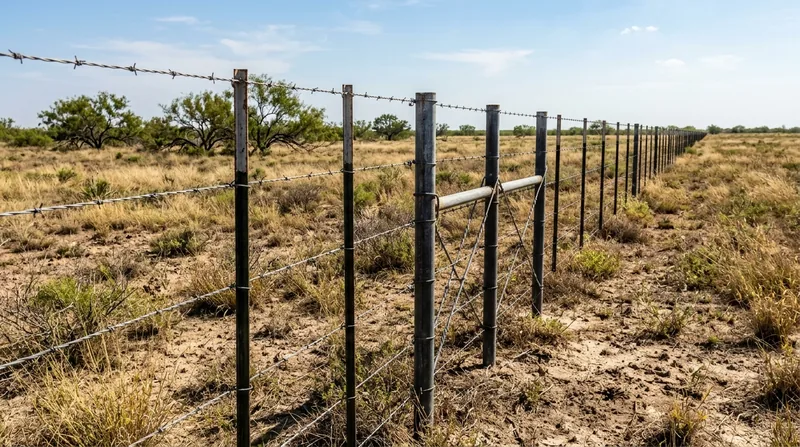




Farm fence installation in Corpus Christi demands posts set deep in coastal clay and sand that shift with every wet-dry cycle. Ranch properties around Kingsville, Sinton, and the open lands of Kleberg County face relentless Gulf wind with no tree canopy to break it, so your fence has to hold. Whether you need wire fencing for livestock, split rail for aesthetics, no-climb horse fence for safety, pipe fencing for durability, or barbed wire for perimeter control, we set posts in concrete and space them tight enough to handle the weather. Since 2016, Corpus Christi Fencing has built and repaired farm and ranch fences across the region. We work from your property line and install fence that lasts through hurricane season and the dry spells that heave posts out of the ground.
Why Farm and Ranch Fencing Matters in Coastal South Texas
Open acreage near Kingsville, Rockport, and the ranching country west of Corpus Christi sits in the path of seasonal storms and year-round wind. A fence that works in town does not work out there. Posts set shallow or tamped in loose sand will heave and lean within two seasons. Wire stretched wrong will sag and fail under the weight of a spooked horse or the pressure of livestock pushing against it. Barbed wire installed by someone who does not understand tension and spacing becomes a hazard instead of a boundary.
- Set posts in concrete 3 feet deep to resist the frost heave and clay shift that moves shallow posts every winter.
- Space posts at 6 to 8 feet for wire or rail fencing, closer for no-climb horse fence where safety is the priority.
- Use galvanized or powder-coated hardware rated for salt air if your property is within 10 miles of the coast.
- Install wire or rails with proper tension and anti-sag bracing so the fence holds shape under wind and animal pressure.
- Choose split rail, pipe, or T-post fencing based on your livestock type and the look you want on your land.
The right fence protects your investment in animals and property, and it holds its line through the storms that roll in from June through November.
Key info: Ranch properties in Kleberg County and around Kingsville sit on expansive clay that heaves posts upward during wet spells and shrinks during droughts. Posts set in concrete and spaced 6 feet apart with proper bracing will hold steady where tamped posts fail within two seasons.
For more information on how we approach durable installations, see our fence post repair and replacement page to understand how posts fail and why concrete-set installation prevents it.
How We Install Farm and Ranch Fencing in Corpus Christi
Every ranch fence starts with a walk of your property line and a clear conversation about what you need the fence to do. Are you containing livestock, marking a boundary, or creating a visual screen? Do you need wire that stretches tight or split rail that looks good and holds stock? We identify the terrain, check for utilities using a Texas 811 locate, and design post spacing and depth to match your soil and wind exposure.
Once we have your approval, we set posts in concrete at the spacing your fence type requires. For wire fencing, we install corner braces and tension hardware that let the wire do its job without sagging. For split rail or pipe, we set rails level and square so they sit true. We finish with any gates, hardware, or additional bracing your property needs.
- Walk your property and identify the line you want fenced, using your existing survey if you have one.
- Call Texas 811 at least two business days before we dig to locate underground utilities.
- Set posts in concrete 3 feet deep, spaced according to the fence type and soil conditions on your land.
- Install rails, wire, or panels with proper tension and bracing to handle wind and animal pressure.
- Add gates, hardware, and any custom details that suit your ranch or farm operation.
The work takes longer on ranch acreage because the distances are greater and the soil is often heavier, but the result is a fence that holds its line for years.
Local example: A 40-acre property outside Sinton with no-climb horse fence requires posts every 6 feet, concrete set 3 feet deep, and corner braces to handle the open wind. The same acreage with split rail for a visual boundary can use 8-foot spacing and lighter rail. We design each fence to your land and your animals.
See our gate installation and repair page if you need a functioning gate at your property entrance or livestock area.
Farm and Ranch Fencing Methods and Materials
| Approach | Description | Best For |
|---|---|---|
| Split Rail Fencing | Three or four horizontal rails mortised into posts, typically pressure-treated or cedar, spaced 8 feet apart. Classic rural look with moderate maintenance. | Visual boundaries on ranches, pasture lines where a rustic appearance fits the property character. |
| No-Climb Horse Fence | Welded wire mesh in 2-inch squares, 4 or 5 feet high, stretched tight and stapled to posts. Horses cannot hook a hoof and climb. Safe and durable. | Horse pastures and equestrian properties where safety is the priority. Prevents injury and escape. |
| Pipe Fencing | Galvanized or powder-coated steel pipe in 2 to 2.5-inch diameter, welded to posts or set in sleeves. Extremely durable and low maintenance. Premium cost. | High-visibility boundaries, livestock containment in harsh conditions, properties near salt air where rust resistance is essential. |
| Wire and Barbed Wire Fencing | Smooth or barbed wire stretched between posts with corner braces and tension hardware. Posts spaced 6 to 8 feet. Low cost and effective containment when installed correctly. | Livestock containment, perimeter marking, large acreage where cost efficiency is important. Requires proper tension and bracing. |
| T-Post and Wire Fencing | Steel T-posts (U-channel) driven into the ground and clipped with wire. Fast installation, minimal concrete, portable if needed. Moderate durability. | Temporary livestock containment, temporary pasture subdivision, quick solutions on acreage where permanent posts are not practical. |
Farm and Ranch Fencing Cost in Corpus Christi: What to Expect
Farm fence installation cost in Corpus Christi starts at approximately $13 per linear foot for basic wire fencing on land with good soil and straight lines. Split rail runs $18 to $25 per foot depending on rail quality and post spacing. No-climb horse fence costs $20 to $28 per foot because of the mesh material and the labor to stretch it tight. Pipe fencing, the most durable option, runs $30 to $40 per foot or higher depending on pipe diameter and finish. Barbed wire is the budget option at $8 to $12 per foot for materials and labor, but requires expert installation to hold tension and prevent sag.
The biggest cost drivers are the distance you need to fence, the soil conditions on your land, and whether posts need extra depth or bracing for wind exposure. Acreage 10 miles from the coast in heavy clay costs more to post than sandy land closer to town because the clay resists digging and the heave risk is higher. Corner braces, gates, and custom hardware add to the total.
Get two or three estimates from contractors who have built ranch fences in your area. A low bid that cuts corners on post depth or spacing will cost you twice as much in repairs within two years. See our full pricing overview for more detail on how we estimate ranch jobs.
Farm and Ranch Fencing Near Me: What Corpus Christi Homeowners Should Know
When you are ready to hire a contractor for ranch fencing, start by asking whether they have built fence on acreage in your area and whether they understand the soil and wind conditions you face. A fence company that works only on residential lots in town will not have the experience to space posts right or brace corners correctly for open land. Ask to see examples of work they have done on ranches around Kingsville, Sinton, or Rockport.
Check that they are fully insured, and that they know how to call a Texas 811 utility locate before digging. If your property is in an unincorporated area of Kleberg or Nueces County, confirm whether a permit is required before you start. Some county jurisdictions require a fence permit and a setback from the property line. Ask your county clerk or building department what applies to your land. If you have a survey, bring it to the estimate. If you do not, work from property markers or pins you can identify.
Ask whether the contractor has experience with the specific fence type you want. Split rail is different from no-climb mesh, and wire fencing demands a different skill than pipe. A good contractor will be honest about what works best on your land and what the timeline will be. Call us at (361) 336-2101 for a free estimate, or visit our contact page to request a walk of your property.
Farm & Ranch Fencing in Corpus Christi: Pricing Guide
| Service | Price | Details |
|---|---|---|
| Wire or Barbed Wire Fencing | From $8 to $12 per linear foot | Materials and labor for wire stretched between posts with tension hardware and corner braces included. Soil type and post spacing affect the final cost. |
| Split Rail Fencing | From $18 to $25 per linear foot | Posts, rails, and installation labor included. Pressure-treated pine costs less than cedar. 8-foot post spacing is standard for split rail. |
| No-Climb Horse Fence | From $20 to $28 per linear foot | Welded mesh, posts, stretching hardware, and labor included. Safety-rated installation for equestrian properties. 6-foot post spacing is typical. |
| Pipe Fencing | From $30 to $40 per linear foot | Galvanized or powder-coated steel pipe, posts, welding, and labor included. Premium durability and salt-air resistance. Minimal maintenance required. |
| Large acreage or custom ranch projects | On estimate | Distance, terrain, soil type, and special requirements like gates or corner braces require an on-site walk before pricing. |
| Free estimate and consultation | No charge | We walk your property, discuss your needs, and provide a written estimate within 24 hours. No obligation to book work. |
Indicative pricing, the exact cost depends on square footage, finish, and site access. Free personalized estimate within 24h at (361) 336-2101.


