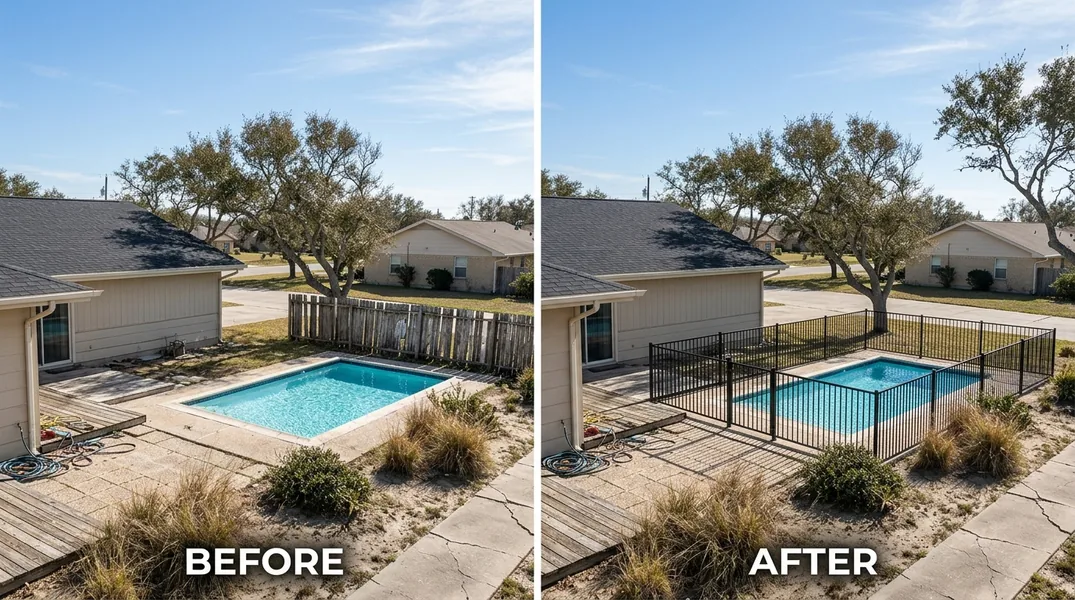
The Challenge of Coastal Fencing: Why Ocean Drive Homes Face Unique Fence Durability Issues
The post-war neighborhoods along Ocean Drive in Corpus Christi are among the most desirable in the area, offering stunning water views and that coveted Gulf Coast lifestyle. But living near the water comes with a price when it comes to home maintenance, especially fencing. Homeowners in these bluff communities face an accelerated battle against corrosion, salt spray, and moisture that can dramatically shorten the lifespan of traditional wood fences.
Unlike inland properties, homes perched along the coast experience constant exposure to salt-laden air and humidity that penetrate wood fibers far more aggressively than in protected areas. The combination of salty ocean breezes, intense Texas sun, and seasonal moisture creates a perfect storm for fence deterioration. Understanding how these environmental factors affect your fence is the first step toward making informed decisions about maintenance, repair, and replacement.
How Long Does a Wood Fence Last in Corpus Christi?
In typical inland conditions across Texas, a well-maintained wood fence can last anywhere from 15 to 20 years. However, if you own a home in Corpus Christi or nearby coastal communities, you should realistically expect a shorter lifespan. For properties along Ocean Drive and other bluff locations, wood fences typically last between 10 to 15 years before significant deterioration becomes apparent. Some homeowners may even see noticeable damage within 8 to 10 years if the fence receives inadequate maintenance.
The difference comes down to environmental stress. Salt air accelerates wood rot, promotes mold and mildew growth, and causes wood fibers to swell and contract more frequently than they would inland. Even pressure-treated lumber, which is designed to resist rot and insect damage, has its limits when exposed to relentless coastal conditions. Cedar and redwood, popular choices for their natural beauty and moderate rot resistance, deteriorate even faster in salty environments. The investment you make in your fence today will require more vigilant care and earlier replacement than homeowners in inland areas might expect.
Signs You Need a New Fence: What to Watch For
Knowing the warning signs of fence failure can help you catch problems before they become safety hazards or eyesores. If you notice soft, spongy wood when you press on fence posts or rails, that is a clear indicator of advanced rot. Leaning or wobbly sections that shift when you push on them suggest structural compromise, often caused by rotted posts below the soil line where moisture accumulates. Widespread splintering, especially on the side facing the ocean, is another telltale sign that your wood fence is nearing the end of its serviceable life.
Discoloration and dark staining are early warning signs worth taking seriously. These marks often indicate mold, mildew, or the beginning stages of wood rot. Gaps appearing between boards, or boards that have warped and twisted out of shape, suggest the wood is losing its structural integrity. If you find yourself constantly repainting or staining your fence every year or two just to keep it looking decent, that is also a signal that the underlying wood is struggling. In coastal areas like the bluffs of Corpus Christi, these problems tend to develop faster than homeowners expect, so regular inspections every spring and fall are wise.
When to Replace a Fence: Timing Your Investment Wisely
The decision to replace your fence is not always straightforward. Sometimes a fence that looks rough on the surface can be restored with professional cleaning, staining, and selective board replacement. Other times, what appears to be a minor problem masks deeper structural issues that make replacement the only sensible option. As a general rule, if repairs are costing you more than 50 percent of what a new fence would cost, replacement is usually the better financial choice.
Timing matters too. If your fence is already 10 to 12 years old and showing multiple signs of distress, replacing it now gives you peace of mind and protects your property value. Waiting until a section collapses not only looks terrible but can create liability issues if someone is injured. For homeowners considering a move or planning to sell, a newer fence is a significant selling point and can actually increase your home's resale value. If you are unsure whether your fence can be repaired or needs replacement, contact Corpus Christi Fencing for a professional assessment. We can evaluate the extent of damage and recommend the most cost-effective solution for your situation.
Wood & Privacy Fence Installation Near Me: Choosing the Right Replacement
When the time comes to replace your fence, you have several options beyond traditional wood. Wood & Privacy Fence Installation remains popular because homeowners love the natural aesthetic and the way wood complements coastal architecture. However, if you want to reduce future maintenance headaches, Vinyl & PVC Fence Installation offers excellent durability in salt-air environments. Vinyl does not rot, does not require staining or painting, and stands up remarkably well to coastal conditions. The initial investment is higher, but the long-term savings in maintenance and replacement frequency often make it worthwhile.
For homeowners who prefer the look and feel of wood but want added durability, composite materials blend wood fibers with plastic to create a hybrid that resists rot and requires minimal maintenance. Aluminum & Ornamental Iron Fencing is another option for those seeking a sophisticated, low-maintenance alternative that handles coastal salt spray exceptionally well. Whatever material you choose, the key is selecting a contractor with experience installing fences in coastal environments. At Corpus Christi Fencing, we understand the unique demands that Ocean Drive properties and other bluff homes face, and we can help you select materials and construction methods designed to last.
Extending Your Fence Lifespan: Maintenance Tips for Coastal Homeowners
Even if you are not ready to replace your fence, proper maintenance can extend its life by several years. Annual or bi-annual pressure washing removes salt residue, mold, and mildew that accelerate deterioration. After washing, apply a quality exterior wood stain or sealant designed for coastal environments. These products penetrate the wood and provide a protective barrier against moisture and salt spray. Pay special attention to the base of fence posts, where water pools and soil moisture create ideal conditions for rot to develop.
Trim any vegetation growing against your fence, as plants trap moisture and prevent air circulation. Inspect your fence after major storms, as wind and salt spray can cause unexpected damage. If you notice a single rotted board, replace it promptly rather than waiting for the problem to spread. These small interventions, though they require some effort and expense, can add years to your fence's life and keep your property looking well-maintained. For professional help with fence maintenance or repairs in Corpus Christi, call Corpus Christi Fencing at (361) 336-2101 to discuss your options and get a free estimate for any work you need.
Looking for a professional tree service in Corpus Christi? Corpus Christi Fencing responds fast for all your fence needs.
Get a Free Quote